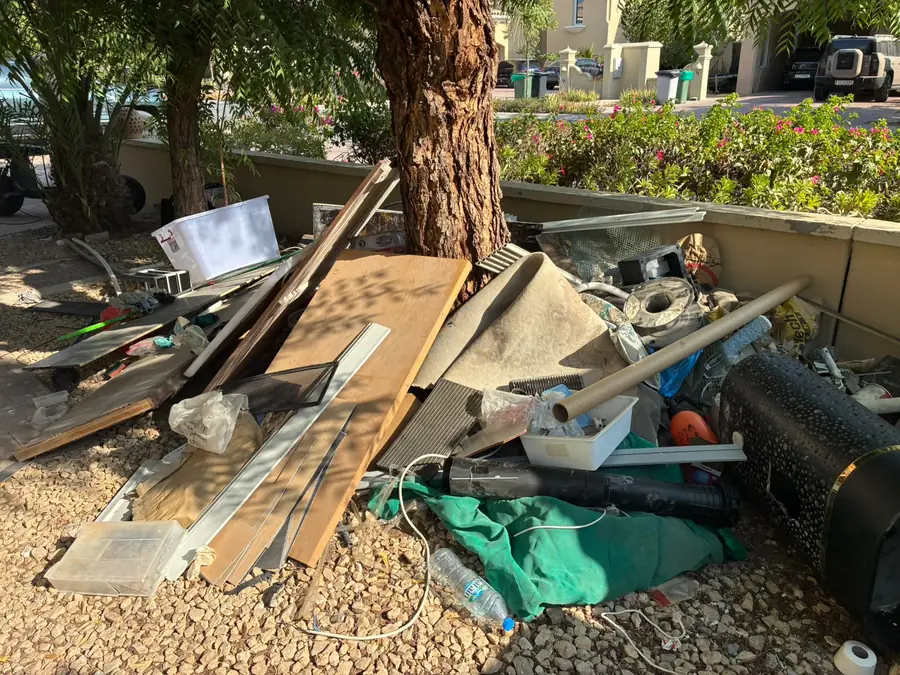
The photo above is a real Dubai villa job, and it is the most common renovation pile we get called to. Plywood sheets leaning against a tree, timber offcuts, lengths of skirting, a rolled up carpet, a plastic storage tub, a cardboard tube, some pipe, and a bag of garden waste that got mixed in along the way. None of it fits in a household bin, and all of it is now sitting on the gravel where the community inspector can see it.
Why the pile cannot stay where it is. Most gated communities in Dubai have rules about material stored outside a villa boundary, and renovation debris on a verge or a shared landscaped area is the fastest way to get a warning notice. In communities run by a master developer the warning usually comes with a deadline, and the follow up is a fine. One of our customers put it bluntly in a Google review after we cleared a pile like this one at short notice. The clock on these things is shorter than people expect.
It is also a safety issue. A stack of plywood and timber with exposed screws and cut edges, sitting next to a walkway where children pass, is a genuine hazard. Add a few weeks of Dubai weather and the cardboard collapses, the carpet soaks up irrigation water and starts to smell, and what was a tidy pile becomes a spreading mess that takes twice as long to load.
What counts as renovation debris. Anything that came out of the building work. Timber, plywood and MDF offcuts. Skirting, door frames and architrave. Tiles, broken ceramics and grout bags. Plasterboard and ceiling panels. Old carpet, underlay and vinyl flooring. Pipe, conduit and electrical offcuts. Sanitaryware. Packaging from new materials, which is usually the single biggest volume and the part people forget to budget for.
What your contractor was supposed to do. A fit out contractor working in a managed community normally signs a fit out agreement that makes debris removal their responsibility. In practice, smaller jobs end with the crew finishing the work, stacking the waste outside and moving to the next site. If you are reading this with a pile outside your gate, that is almost certainly what happened. It is worth checking your contract before you pay for removal yourself, because there is a reasonable chance you already paid for it once.
How a clearance like this actually runs. We quote from photos, so send the pile exactly as it stands. The things that change the price are volume, weight, and whether the material is mixed. Clean timber and clean metal are cheaper to handle than a mixed load, because they go to different places. Soil, rubble and tile are the heavy items that hit the vehicle weight limit long before they fill the bed, so they are priced separately. A pile the size of the one in the photo is normally a half load and a single visit.
Separate the material if you can. If your crew is still on site, ask them to keep timber in one stack, metal in another, and packaging in a third. That one instruction can take a noticeable amount off the disposal cost, because clean streams go to recycling rather than to general waste. It also makes the load faster, and loading time is part of what you are paying for.
The one thing we cannot take. Asbestos. If the villa predates the mid 2000s and the work exposed ceiling board, pipe lagging or corrugated roof sheeting that you are unsure about, stop and get it surveyed. Asbestos removal is a separate licensed trade working under its own rules, and no general junk removal company should be putting it on a truck. We will tell you the same thing on site and leave it where it is.
We also cannot take the paint. Half used tins of paint, solvent, adhesive, sealant and fuel are chemical waste. They need a hazardous waste route, not a general one. Set them aside before we arrive and we will point you at the right disposal option.
Timing it around a handover. If the renovation is finishing ahead of a property handover or a new tenant moving in, book the clearance for a day or two before the inspection rather than the morning of it. Something always turns up behind the pile. A day of slack is the difference between a clean handover and an argument about the deposit.
Frequently Asked Questions
Need Junk Removed Today?
Get a free quote — same-day service available across all UAE emirates